Transcript - Senior Team: Curriculum Model Discussion
Headteacher: “Thoughts?”
Mr Grape: “If we get rid of Learning to Learn we will have an extra period for Maths.”
Miss Plum: “Keep it as it is but make sure English exam classes are timetabled in the morning.”
Mr Apple: “Extend the school day.”
Mr Orange: “ZzzzZzzzz”
Mrs Pineapple: “Create a carousel to include Technology, Drama and Music.”
Mr Mark: “How about we design our curriculum model that works on the premise that students should have a break every hour for approximately 20 minutes.”
Headteacher: “Seriously Mark - this is no time for joking. Does anyone have anything else to add that is based on rational thinking?”
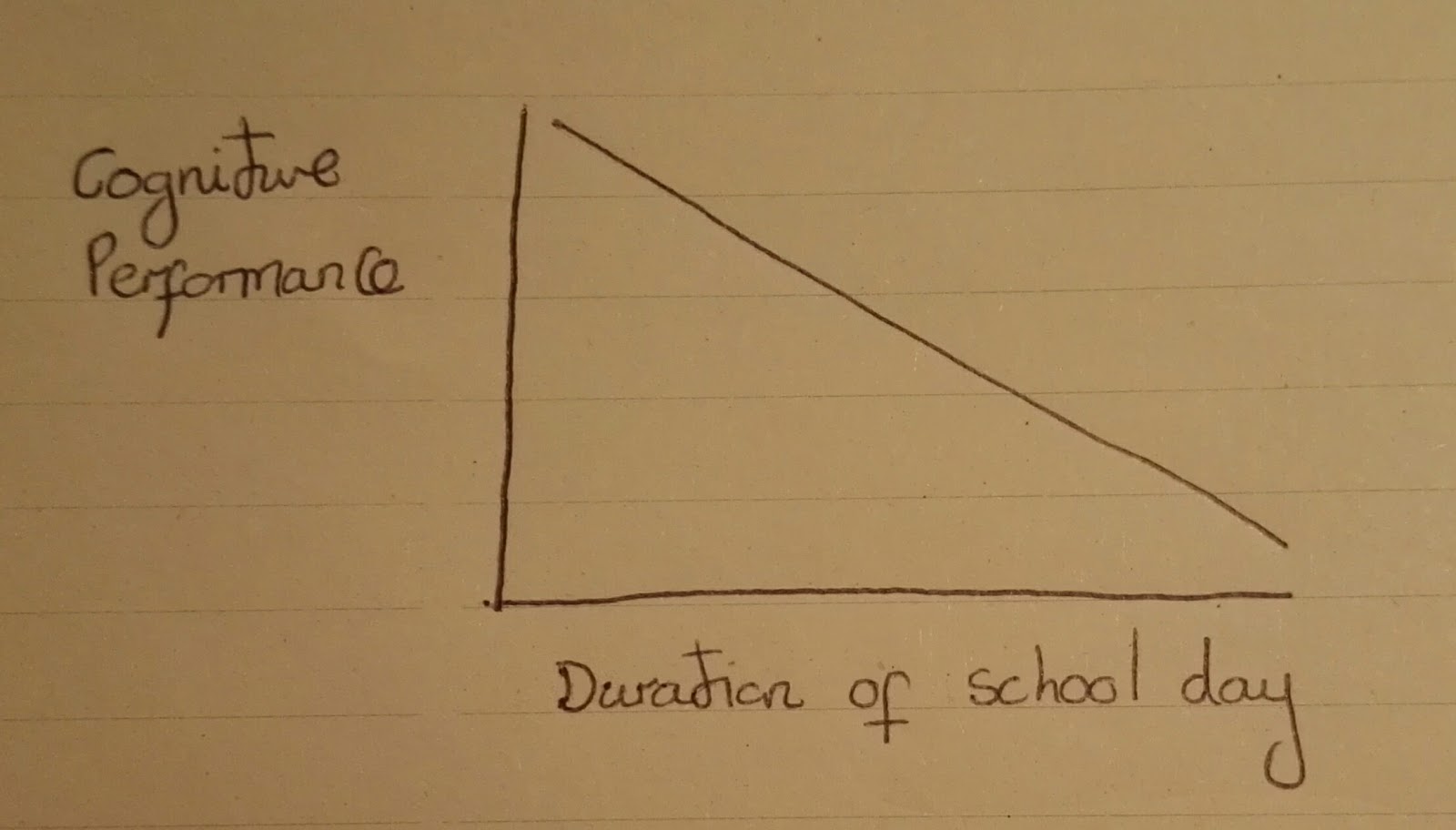
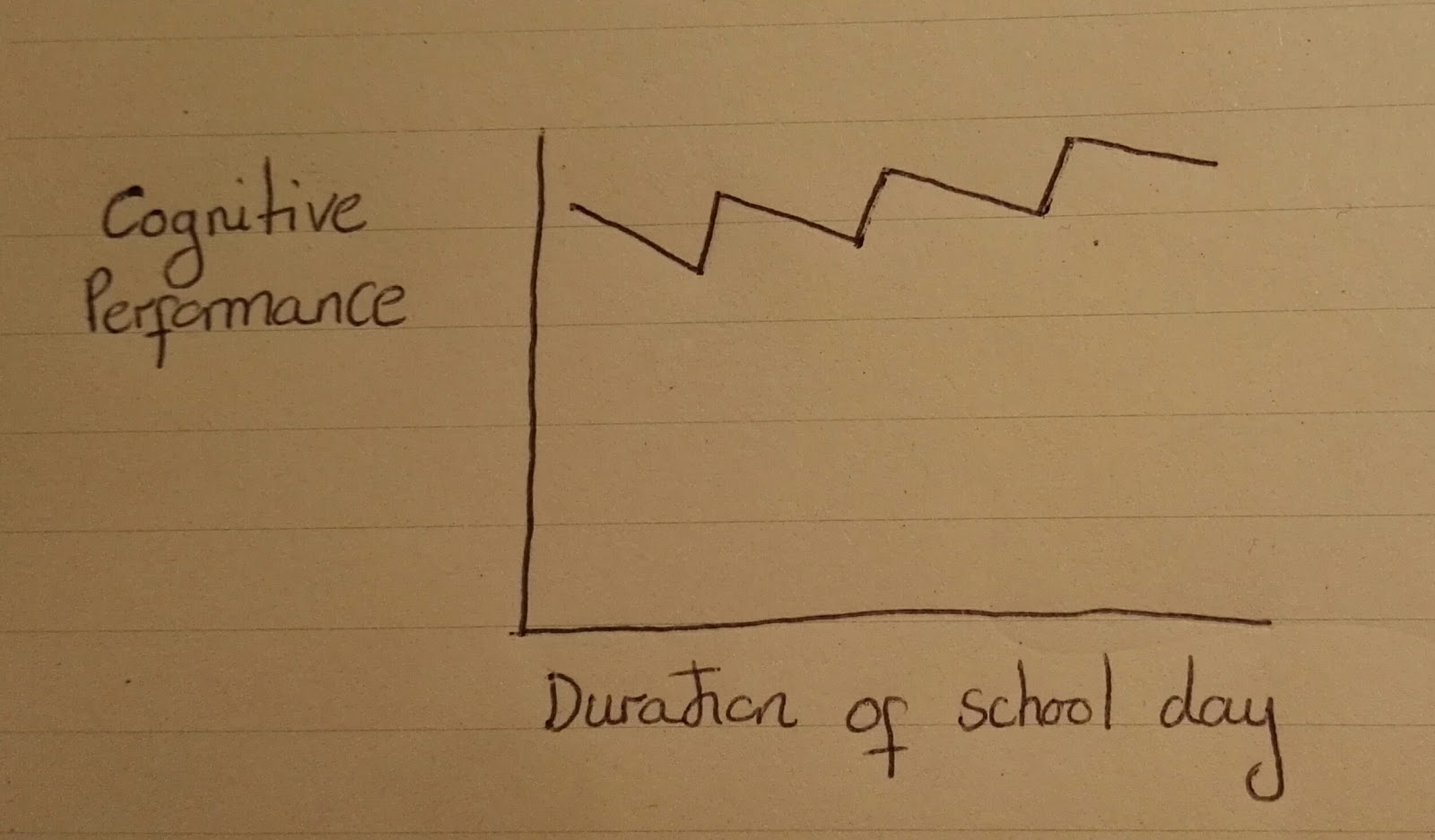
What if Mr Mark’s comments are not a joke? What if, as school leaders, we continue to create curriculum models that focus on the wrong MORE. Rather than MORE maths, English, science, norsk, Ebacc (UK) allocated time, perhaps we should focus on adding MORE break-times (recess) in an attempt to improve student performance. What a ludicrous idea, right? Wrong! According to a study conducted in Denmark, cognitive fatigue in students has an impact on tests scores, with student performance deteriorating every hour of a school day. Unfortunately, such deterioration is inevitable based on the design of a school timetable rather than as a result of some biological design flaw. If students receive a 20-30 minute break after every two hours of study, then cognitive decline is inevitable. However, if students receive a 20 - 30 minute break after every hour of study, then not only is the deterioration halted, but test performance actually improves over the school day.
Based on the above study which model should schools look to emulate?
A truthiness model showing student performance over a school day:
A reality model (based on many schools curriculum model/school day) showing student performance over a school day:
A possible model (based on a school day with a break for 20 min after every hour of study) showing student performance over a school day:
Recently I became the incarnation of Harvey Dent, determining the rewards for students by the simple toss of a coin. Despite Two Face’s actions (in response to gambling people's lives or situations on the toss of a coin) often leading to disaster and destruction. I, on the other hand, enjoyed the opposite impact; students became more eager than ever to answer questions or offer their opinion in class. All it took was a slight tweak in how I applied the school reward system: if I thought a student warranted a house point he/she was offered the house point but with the opportunity to gamble. This strategy had three areas of unpredictability:
How the House Points were awarded - I awarded a point based on student performance against the IB learner profile traits when I deemed fit
The opportunity to gamble - toss of a coin
The gamble randomly alternated between double or nothing, triple or nothing, and quadruple or nothing
I employed this strategy in the penultimate and final weeks (weeks 6 and 7) before the winter break. Whilst I would usually expect a slight decrease in student motivation during these weeks, the opposite became apparent. Student motivation appeared to increase. When I asked the class questions, I was often faced with over eagerness shouts of “me, me me Mr Mark me!”. And when offering one student the opportunity to gamble, she responded with: “This is why I love English”. Furthermore, a small group of boys who have only been learning English for 18 months threw off the shackles of worrying about making mistakes and became proactive in discussions, group work, and question and answer sessions because they hoped they would have the opportunity to gamble a house point should they be awarded one.
I think it is worth pointing out that our reward system is based on a collective approach. There is no individual gain from being awarded a house point. All students are assigned to one of four houses. And, in an effort to reinforce our host culture – our house system is named after four of the Norse Gods: Tyr, Heimdall, Buri & Skadi. House points are distributed each week by teachers if they perceive students to be demonstrating any of the IB learner Profile traits: risk-taker; caring; communicator; knowledgeable; principled; balanced; inquirer; open-minded; reflective; thinker. These points are collated each week and posted on the house competition noticeboard. As there is no personal gain from gambling a house point, it would appear that student motivation increased due to the hope of having an opportunity to gamble.
I also think it is worth pointing out that this approach is an attempt at evidence-informed practice, based on neuroscientific research conducted by Dr Paul Howard Jones. His research looks at the amount of dopamine generated in a part of the brain called the nucleus accumbens. His research suggests that the dopamine response in this part of the brain orientates our attention, and creates synaptic plasticity which is an indicator that learning has occurred. The more the nucleus accumbens (in response to dopamine) is activated, the more you are likely to remember. The nucleus accumbens is activated when the possibility of a reward is uncertain, rather than when there is consistency and predictability in the reward process. Therefore, rewards do not predict learning, whereas the brain's response to rewards does. And the brain responds to those rewards that are unpredictable; when there is a chance of no reward.
The Final Word: Two sides of the same coin
Whilst it helps that being a 'risk- taker' is one of the ten IB learner profile traits when implementing this strategy, I am conscious that during the two week implementation process not one student commented on the need to be 'principled', another of the IB learner profile traits. The idea of using the concept of gambling as a way to stimulate learning sits a little uneasy with this teacher. You see, just like Two Face or a coin, this strategy has two sides.
The Students’ Final Word:
When I offered a student the chance to gamble by the toss of a coin I stated the following:
“You have a 50/50 chance of winning!”
In response to this comment a host of hands shot up. One student then advised me that I had made an incorrect statement - That it is in fact 51/49 in favour of the side facing up when the coin is tossed:
"Not everything that counts can be counted and not everything that can be counted counts." William Bruce Cameron
The Benefit of Serving Two Masters
Within many nations, there appears to be growing uncertainty about what education should mean, each one looking over their shoulder at other neighbours, wondering how they can improve their system and gain better and better results. A country’s place in the Pisa standings appears to be quickly becoming the holy grail for politicians looking to further their own, and their parties cause. Is Norway any different?
In 2013, in response to the release of the Pisa results, Norwegian education minister Torbjørn Røe Isaksen said: "The new PISA survey shows that we have a science problem in Norway. It worries me greatly. The results are simply not good enough." The article published in the online newspaper The Local also stated: "‘It surprises me that the results are so bad,’ said Norwegian Prime Minister Erna Solberg, before heaping the blame on the previous Labour-led government.” 1
Alongside the Pisa tests, Norwegian children must also contend with National Tests. The tests, which in their current form were introduced in 2007, are to be used to inform education policy and allocate resources.However, it is widely accepted that the greater the value placed on these tests by politicians, the media, and parents, the greater likelihood there will be of a narrowing of the curriculum.
“Curriculum narrowing, however, reduces many students’ chances of being thought talented in school and results in a restriction in the creative and enjoyable activities engaged in by teachers and students. The tests commonly used with narrower curricula also appear to restrict thinking skills. In addition, responses to high stakes environments can easily retard the development of achievement in later grades as a function of the restrictions on learning in earlier grades.” 2
The narrowing of the curriculum is not just about prioritising those subjects that are tested over those that are not, it also often entails ignoring the holistic development of children. Of course, most education systems worldwide advocate a holistic approach to education. However, if discrete disciplines such as English, Maths, Science or Norwegian are placed at the centre of an educational framework then this sends a clear message to schools about what is important, especially when such high priority is placed on tests by the media and politicians. Unfortunately, I have witnessed first-hand how such a system of education leads to many teachers to de-prioritise, or even ignore many other essential purposes of education. With such testing taking centre stage, it is important to have a model of education that at its core advocates achieving academic excellence by educating our children. This is much more than just teaching subject knowledge, or worse still, teaching to the test.
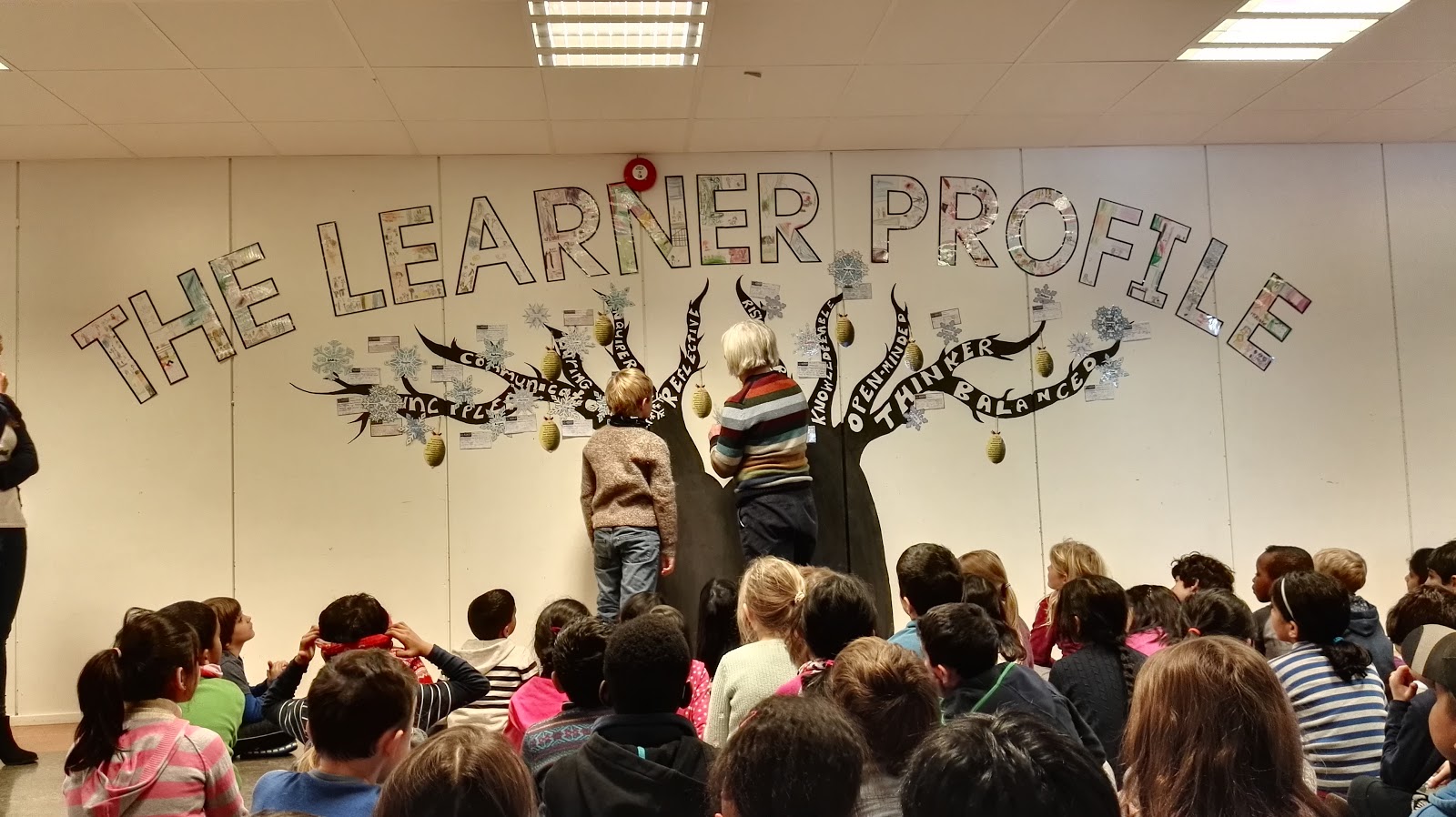
In contrast, the International Baccalaureate framework places (at all levels: PYP, MYP & DP) the child at the centre of its educational philosophy in the form of The 10 Learner Profile attributes: Balanced, Caring, Communicator, Knowledgeable, Inquirer, Open-minded, Principled, Reflective, Risk-taker, Thinker.
The learner profile (and its positioning at the centre of the IB framework), means that this approach to education is a must as opposed to a should or a could. Its position keeps our focus on attempting to develop children into successful human beings, rather than children who are successful at tests, or knowledgeable in subject content. Consider the following extract:
Dear Teacher,
I am a survivor of a concentration camp. My eyes saw what no person should witness:
Gas chambers built by learned engineers.
Children poisoned by educated Physicians.
Infants killed by trained nurses.
Women and babies shot by high school and college graduates, so I am suspicious of education.
My request is: Help your children to become human. Your efforts must never produce learned monsters, skilled psychopaths, educated Eichmanns.
Reading, writing and arithmetic are only important if only they serve to make our children more humane. (Ginot 1973, p24) 3
As such, the learner profile assembly (every Friday) is fast becoming my favourite school time of the week. It is a lovely reminder about the purpose of education.
The above twitter dialogue is a snippet of a conversation I had with Gary Jones and other educationalists on social media about the role of research in education. After almost 15 years as a teacher, and 7 as a senior leader, it would appear that there is at last a strong focus on building a profession based partly on research, to support experience based practice. But to what extent should teachers and school leaders be influenced by the body of evidence presently circulating? Both Gary Jones and Dylan Wiliam offer these perspectives on evidence based practice/disciplined practice:
However, personally I find myself nodding in agreement with Alex Quigley’s comments in his blog post:Just Don’t Call It Research about how teachers can best become evidence based practitioners:
I’m sure ‘disciplined inquiry‘ could be mangled to mean what we want it to mean, but I very much like Paul Hood’s helpful breakdown of thecharacteristics of disciplined inquiry:
Meaningful topics are addressed
Systematic, clearly described procedures are employed and described so that readers can follow the logic of the study and assess the validity of the study’s conclusion
There is sensitivity to the errors that are associated with the methods employed and efforts are made to control the errors or consider how they influence the results
Empirical verification and sound logic are valued: and
Plausible alternative explanations are considered
I like these characteristics because they encourage teachers to apply their practical wisdom – recommended by Wiliam – but in a more disciplined way that we can typically apply in our busy working week, by using ‘logic‘ and considering ‘plausible alternatives‘.
I also agree with Alex about the need to avoid the cherry picking of research. Therefore, in my attempts to avoidconfirmation bias, I regularly read the work of David Didau and Greg Ashman in support oftraditionalists approaches to teaching. Their writings (Didau’s in particular) help me to question some of my deep (progressive) rooted beliefs about teaching. Didau’s sustained references to cognitive science, and his style of writing always make it difficult to entirely deny his assertions. Especially as he fills his writings with subtle reminders about the need to question one’s beliefs about teaching:
“If your beliefs don’t bear up under close critical evaluation, then maybe. just maybe, you believe in something silly.”
"But the irrefutable evidence that we are so often wrong should at least give us reason to question our intuition. If the cognitive scientists are right, we could make a profound difference to how well our students learn. If all their empirical evidence turns out to be wrong, no one’s died. It may not be worth betting your life on, but it outweighs the risk of going with a hunch.”
Despite Didau’s reminders, research can never tell the complete story. Teaching that has resulted in outstanding outcomes for my students year on year is evidence that what I am doing works. Yet there is always room for improvement; and perhaps (for this teacher) evidence informed practice can lead toaggregated marginal gains and help myself and others avoid the plateau effect:
“…There appear to be important gains in teaching quality in the first year of experience and smaller gains over the next few career years. However, there is little evidence that most teachers continue to improve after the first three years.” Steven G. Rivkin, Eric A. Hanushek, and John F. Kain in 2005
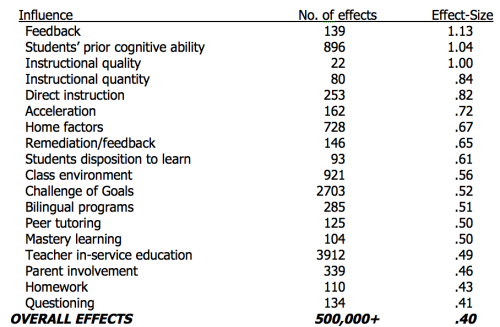
The particular area of my practice that I have been attempting to improve as an evidence informed practitioner is feedback. Whilst feedback has the potential to have a significant positive impact on learning, as evidenced by Hattie’s effects table below:
Has evidence informed practice benefited my teaching?
Part 1 - The Learning Environment
Both Dylan and Didau suggests that positive relationships are essential for effective teaching:
"Trust is a better predictor of teacher success than expertise. A teacher may know their subject inside out, but if their pupils don't trust them they won't feel very motivated." Didau (2015: 344)
and
"Without the relationships all the research in the world won't matter."Dylan Wiliam
Grade 7 students were required to retell part of the original story ofThe Three Little Pigs. Areas to consider:
Audience
First Person Perspective: Wolf or the Third Pig or alternative characters
Contemporary version
Speech
Internal Monologue
SPaG
In line with the International Baccalaureate's philosophy of backward planning, students were given the rubric at the beginning of the unit. The language of the rubric was not dumbed down - I am of the opinion that students need to work within the language of the domain they are studying. Students must therefore become accustomed to using this language in the present context, and any future context. Whilst I am a fan of the use of rubrics for backward planning, I am also conscious that they potentially have a number of pitfalls, pitfalls I am confident can be overcome providing certain step are taken. For example, in an article published by Faculty FocusMaryellen Weimer states:
“In the study, research reports written using the rubric were significantly better than those written not using a rubric. It is fair to ask whether use of the rubric improved their research report writing in general or only this one time on this one assignment.”
One must therefore be aware that whilst the use of a rubric appears to benefit short term performance, there is no suggestion from this research that this performance will lead to improved performance within a different context, or a future context that requires the same knowledge and/or skills. However, Daniel Willingham argues that:
Possible Solution: The use ofspacing in conjunction with unit rubrics can ensure that the short term gains made by using rubrics can be sustained over time, and hopefully ensure that the information is stored in long term memory:
My next step was to create opportunities for feedback to the students that matched my philosophy: that feedback is most effective in promoting learning if it involves the students in the process of deciding what the next steps should be, so that they are not passive recipients of the teacher’s judgments of their work. The steps provided below have attempted to stay true to this philosophy.
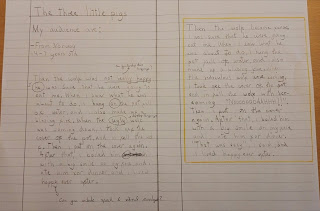
Firstly, I provided written feedback to students to consider based on the rubric, and the school literacy marking code. The feedback was in response to students writing a first draft that only contained the first five sentences of their text. I wanted the students to focus on producing quality rather than quantity to begin with. Feedback (in all forms) would simply be focused on improving these initial first five sentences.
Secondly, in accordance with Andrew Quigley's advice, I also had a quick chat with the students to ensure they understood the comments/code provided in an attempt to avoid misunderstanding:
The need to talk to my students about the written feedback is particularly important considering that English is the second or third language for many of the students in my class.
Grade 7 Asker International School
Although, I am aware that Didau would suggest that this form of feedback simply implies mimicry rather than learning.
Students Responses To Teacher Feedback
Dylan Wiliam's argues that there is no point giving feedback unless you allow time to use the feedback, and that feedback should be more work for the student than it is for the teacher. As such, students were given time during the following lesson to write their next draft.
Student A: first language Norwegian, second language English
Student B: first language Chechnyan, second language Norwegian, third language English (started learning 18 months ago)
Preparing Students for Peer Feedback
A recent study that focused on learning in the IB Primary Years had this to say about peer assessment:
“Teachers were more equivocal about peer assessment, expressing doubts about its value as a valid assessment tool and cautioning about the risks of using peer assessment or feedback in the absence of strong modelling for students.”IB Research Summary Assessment 2016
In contrast, Hattie's comments regarding peer assessment paint a much more positive picture::
I am of the opinion that as teachers it is our role to ensure that students are equipped with an understanding of how to conduct peers assessment, and that as Dylan Wiliam suggests ensure the feedback is cognitive rather than emotional, which is the benefit of having a rubric to work with. As such, prior to the peer feedback session students wrote down what they should look for based on their knowledge of the assessment rubric. I also intentionally avoided students placing this information into grade bands due to the potential issue surrounding interpretation of the various verbs that are often used to distinguish one grade band from another:
"A rubric is not like an engineering standard, Sadler explained. In such a standard, we can specify to the millimetre something quite explicit. Instead, a rubric will contain vague words such as ‘coherence’ and ‘flow’ and will have a graduation in performance that will move from ‘demonstrating a good command of sentence structure’ to ‘demonstrating a sophisticated command of sentence structure’ and so on. The danger is obvious; different teachers will interpret these statements differently." Ashman (2016: 95)
Additionally, I did not wish the students to align their marking to a particular grade band, rather to simply offer advice that would help move a fellow student forward in their (apparent) learning. This was to avoid the issue of students simply focusing on/or trying to work out the grade the feedback comments might be aligned to:
An interesting development from this process was that some students brought new criteria in the form of descriptive writing techniques that they referred to as rich vocabulary. What transpired next was a conversation about the ways in which the students could enrich the language they were using. I therefore had a decision to make: either direct the students to focus only on the original rubric requirements, or to allow the students to make comments on additional elements attached to the notion of good writing. In this case my response to allow additional information beyond the requirements of the rubrics was influenced by both David Didau's and Greg Ashman's comments on the use of assessment rubrics. Didau states the following relating to the restrictive nature of rubrics:
Greg Ashman also appears to be of the same opinion when he writes:
"Imagine the following scenario: we have used our expert concept of quality or a sample of papers to derive a set criteria that distinguish between essays of differing levels of quality. These criteria are only a sample of all the aspects that we could notice but these are what we write into our assessment rubric. Teachers then view this rubric as a target and specifically focus on teaching students to demonstrate evidence of meeting these specific criteria, perhaps at the expense of other aspects of the performance."(Ashman 2016: 97)
I am inclined to think, that I had not recently read the work of both of these two educationalists then my response would have been to request that the students remain to the confines of the original rubric (anchoring effect maybe?). Instead, I saw this as an opportunity to tap into student curiosity, which is the bedrock of the inquiry based classroom. This was followed up by a series of lessons on using the senses to invoke descriptive writing similar to the information in the clip below. It was also a classic example of how as teachers we should ensure that weteach the students and not just the subject.
Peer Feedback
The students did not conduct peer feedback in their usual classroom. Instead, they moved to a neighbouring classroom. This was part of my drive this year to adhere to the following advice:
"If you’re after sustained improvement then you want to introduce as much variability into your teaching as possible: change rooms, change seating, change displays, remove the comforting and familiar background to lessons; mix up topics. These desirable topics will slow down performance but will lead to increased long term retention and transfer of knowledge between contexts.” (Didau 2015: 127)
Grade 7 Asker International School
This clip is on the school blog and in the public domain
I also made certain that on my travels around the classroom I checked the written feedback for incorrect advice. And whilst there were some mistakes, I agree withAlex Quiqley that these are opportunities for clearing up misunderstandings. It would appear from my experience that the potential positive impact of peer assessment definitely outweighs the potential negatives providing teachers are aware of its possible pitfalls.
Draft 3
Student were requested to write their next draft based on the feedback from the peer assessment session, and the lessons relating to the senses and descriptive writing.
Self Assessment
Unlike peer feedback, self-assessment appears a favourable strategy in IB schools: “Self-assessment was highly valued for its ability to build reflective lifelong learners.”IB Research Summary Assessment 2016
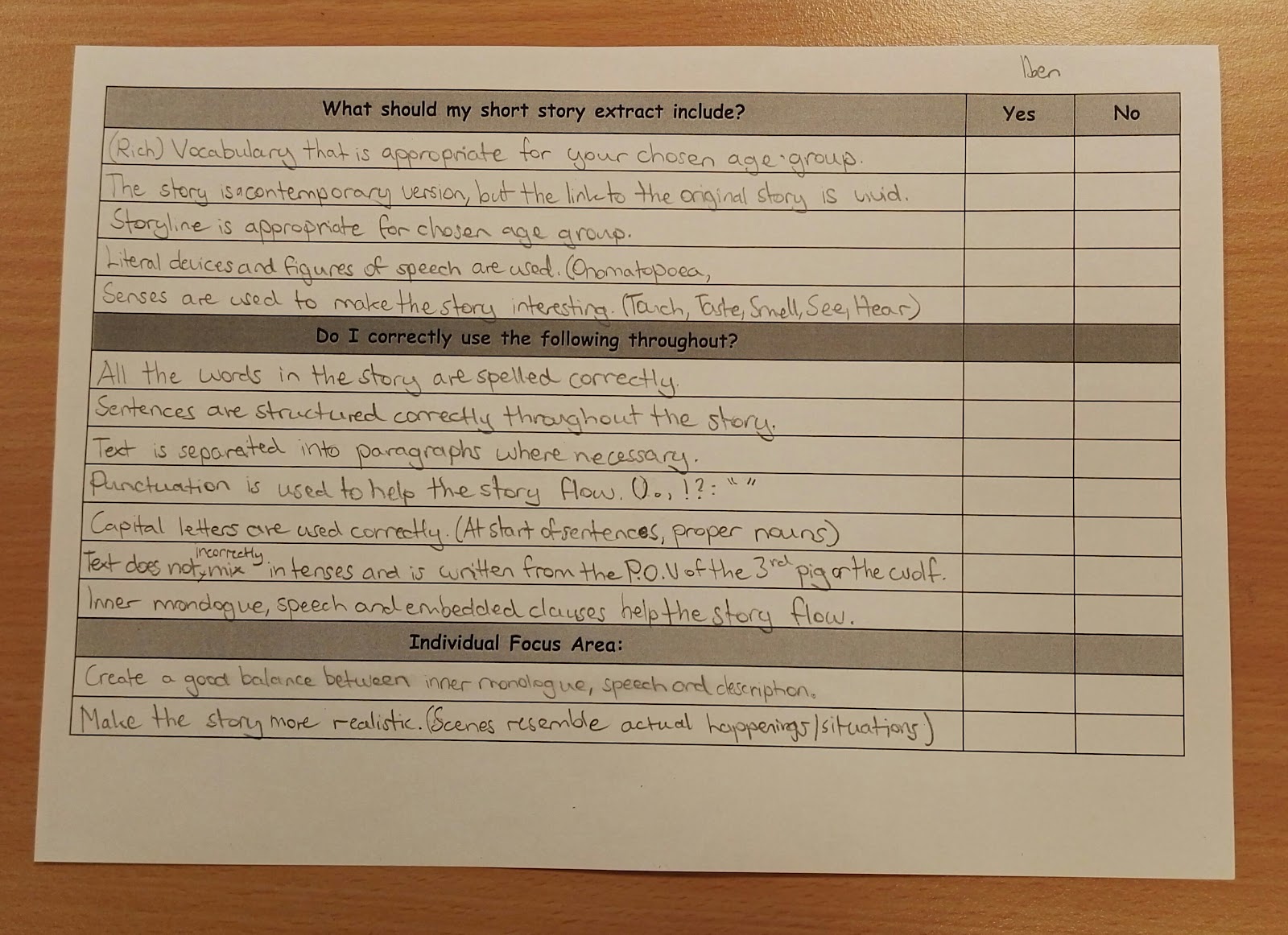
In groups, students created the self assessment sheet (without access to the original rubric):
Students then completed the document individually with the addition of two individualised areas for improvement:
Final Version
Student B: first language Chechnyan, second language Norwegian, third language English (started learning 18 months ago)
Student C: first language Mandarin, second/third language Norwegian/English